

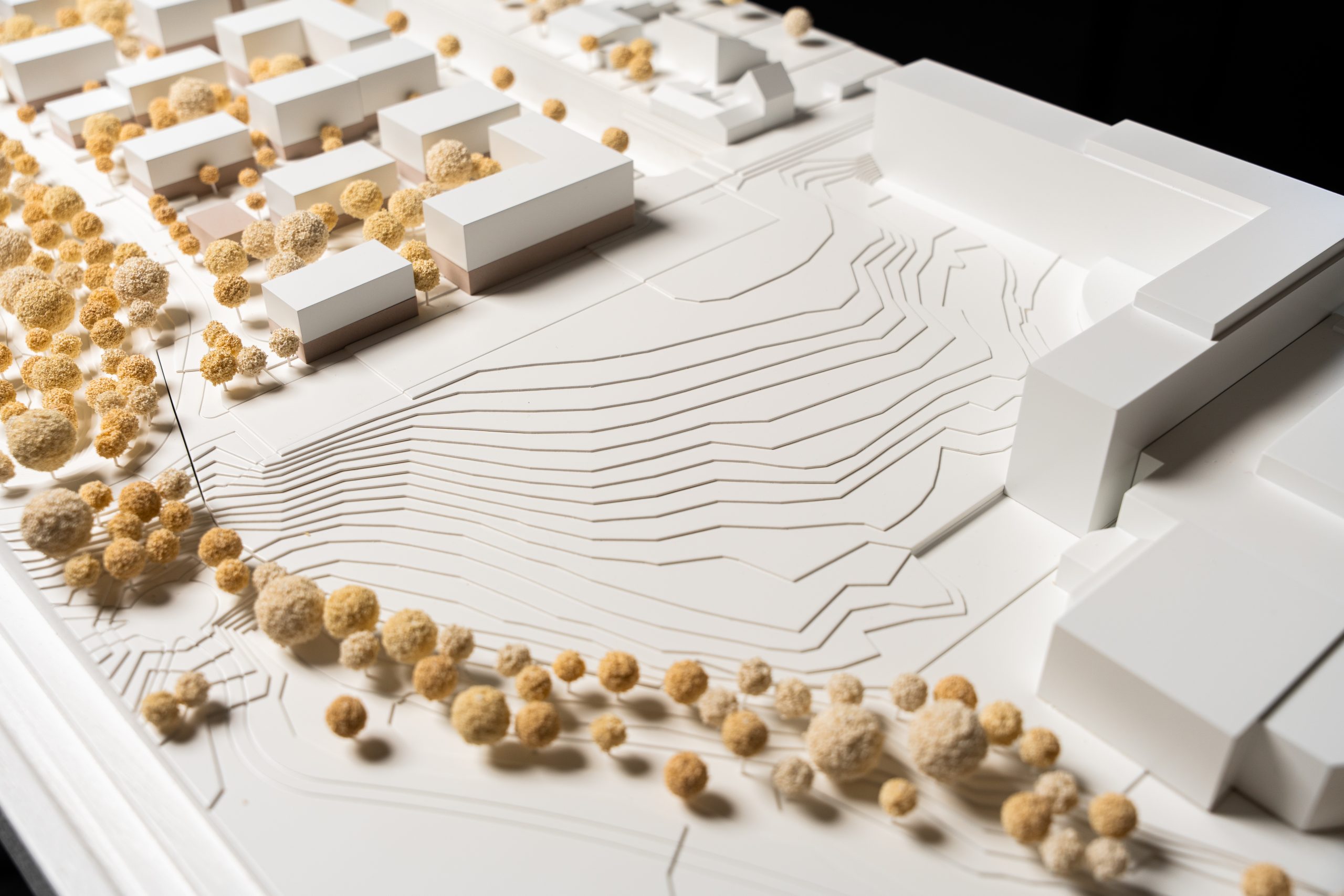
Architectural model making
Architectural model making with CNC: precise models, efficiently produced
Produce contour lines, engravings, building volumes and precise model parts directly from digital designs. With STEPCRAFT CNC machines, architecture firms, model makers and design studios shape their architectural models efficiently, repeatably and professionally.
- Contour lines as layered or relief model
- Engravings in the same operation
- Up to 1302 × 2670 mm base plate on the Q.408
Why CNC
Why CNC in architectural model making?
In architectural model making, digital designs must be translated into physical models quickly, precisely and convincingly. Whether competition model, presentation model, contour model or detail study: architecture firms and model-making workshops often work with tight schedules, complex geometries and high demands on dimensional accuracy and surface quality.
With CNC milling, many of these work steps can be carried out more efficiently and repeatably. Contour lines, engravings, base plates, building volumes and individual model parts are produced directly from digital data. This reduces manual work, creates reproducible results and gives you more control over the entire model-making process.
Repeatability
Reliably reproduce identical parts, including series, variants and recurring model components.
Edge stability
Clean contours and stable edges for high-quality architectural models with a professional look.
Precision
Transfer contour lines, engravings and details exactly from digital designs into physical model parts.
Contour lines
Milling contour lines and terrain models
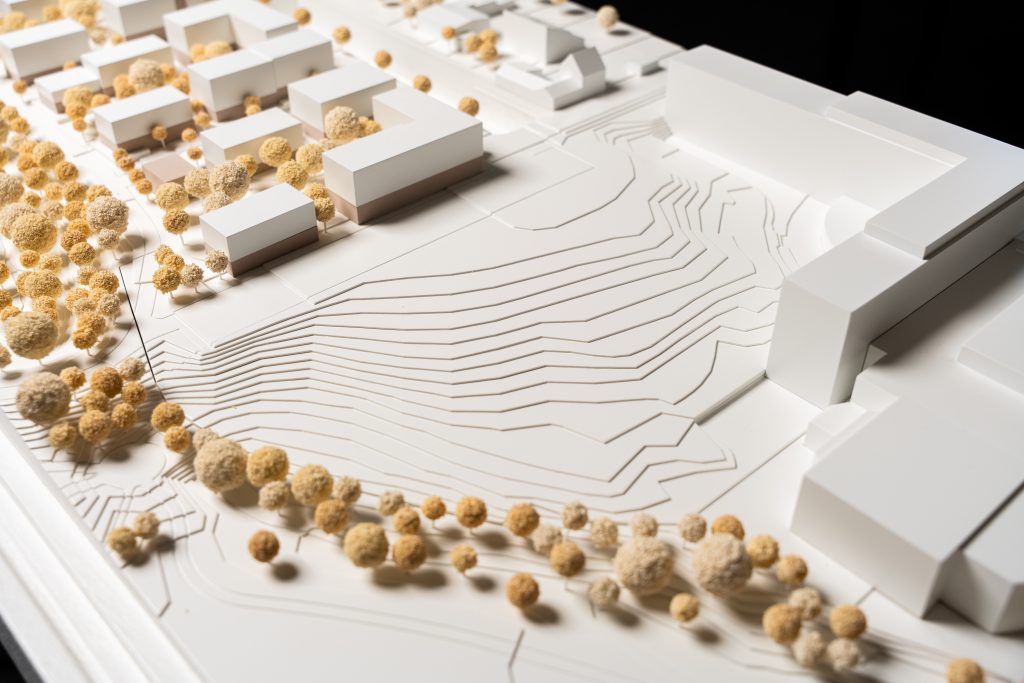
Topographic models are at the heart of many architectural and competition models. With the CNC router, you transfer contour lines directly from digital elevation data into the material: layer by layer, with clean edges and exactly to the required scale.
Whether a stacked layer model made of individual sheets or terrain as a relief from a single piece: the machine mills every level with the same precision, and if the plans change, you simply produce the model again. You engrave roads, paths and property boundaries in the same operation.
- Layer models from MDF, plywood, rigid foam or model-making boards
- Terrain reliefs from a single piece, including solid wood
- Engraved paths, roads and property boundaries in the same operation
- Large contour models and base plates on the Q.408 up to 1302 × 2670 mm
Workflow
From digital design to finished architectural model
Many architectural models today are based on digital data. With a STEPCRAFT CNC router, you use this data directly to produce precise model parts.
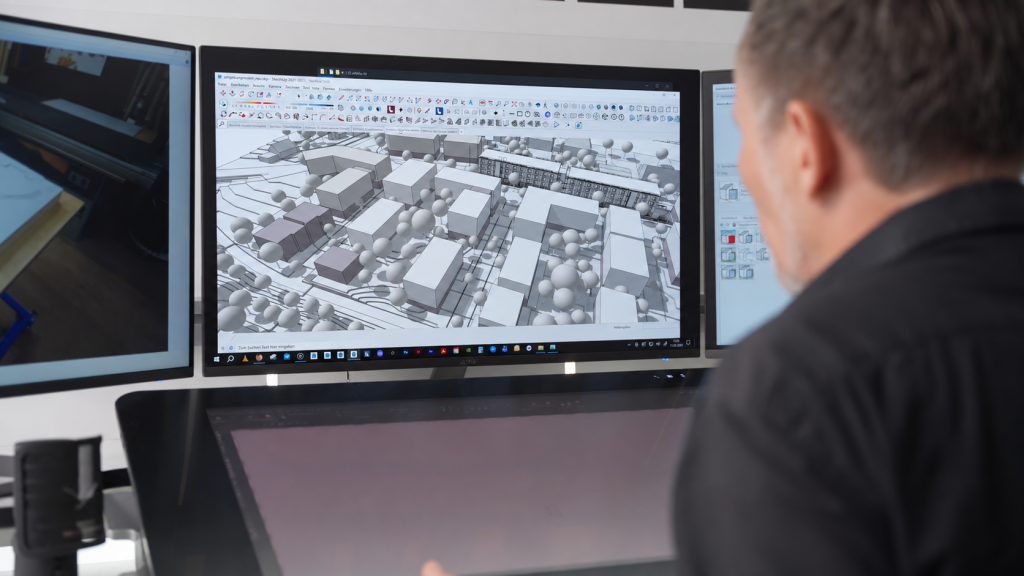
Preparing digital data
CAD data, renderings, elevation information or drawings form the basis. Contours, surfaces and details are prepared for CNC machining.
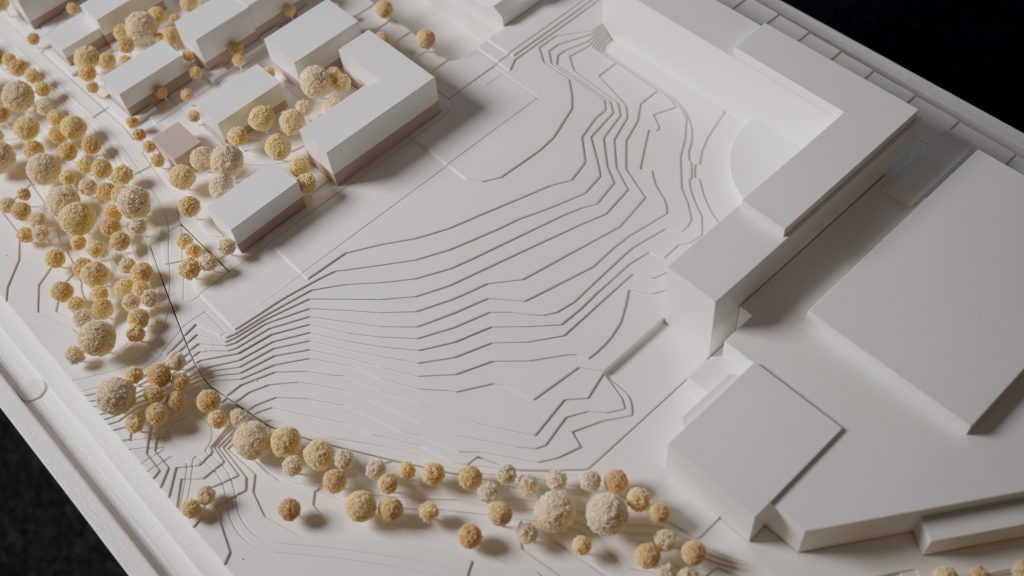
Creating milling data
The designs are turned into toolpaths, matched to material, cutter, machining depth and the required surface quality.
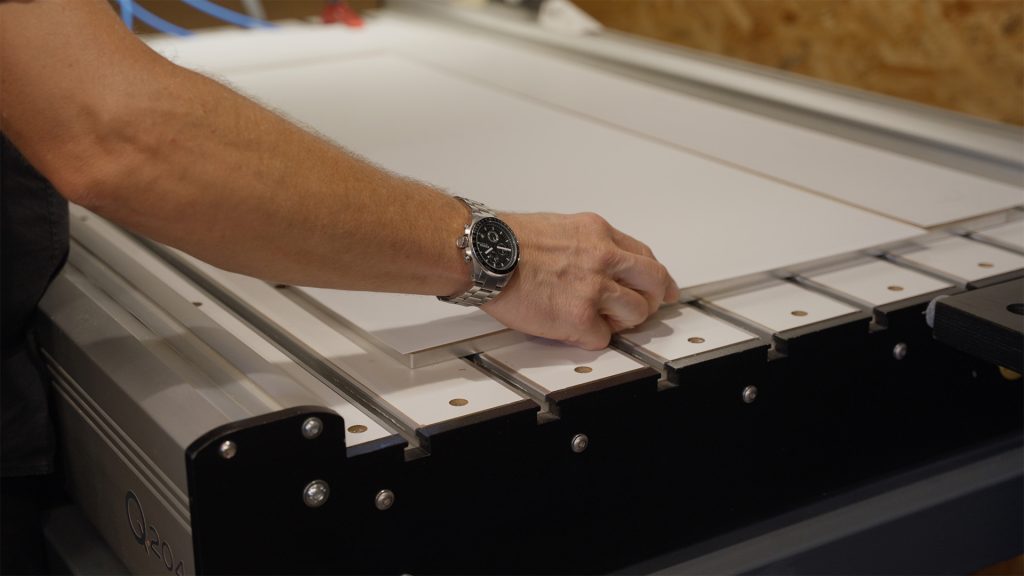
Selecting and clamping the material
MDF, plywood, solid wood, rigid foam, model-making boards, plastics or acrylic are fixed on the machine.
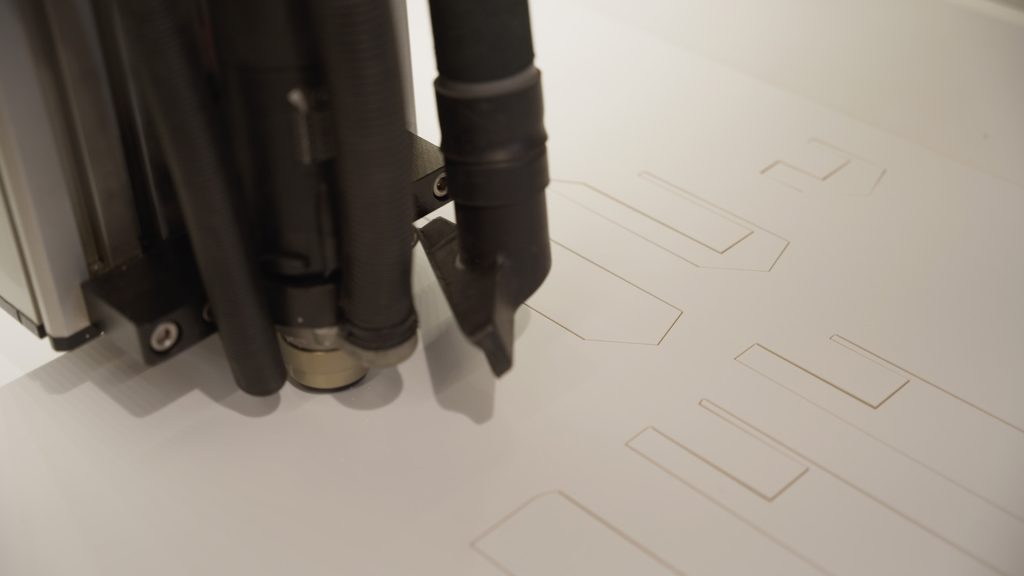
Milling contour lines, engravings and parts
Topographic structures, engravings, building volumes, base plates and individual parts are produced precisely and repeatably.
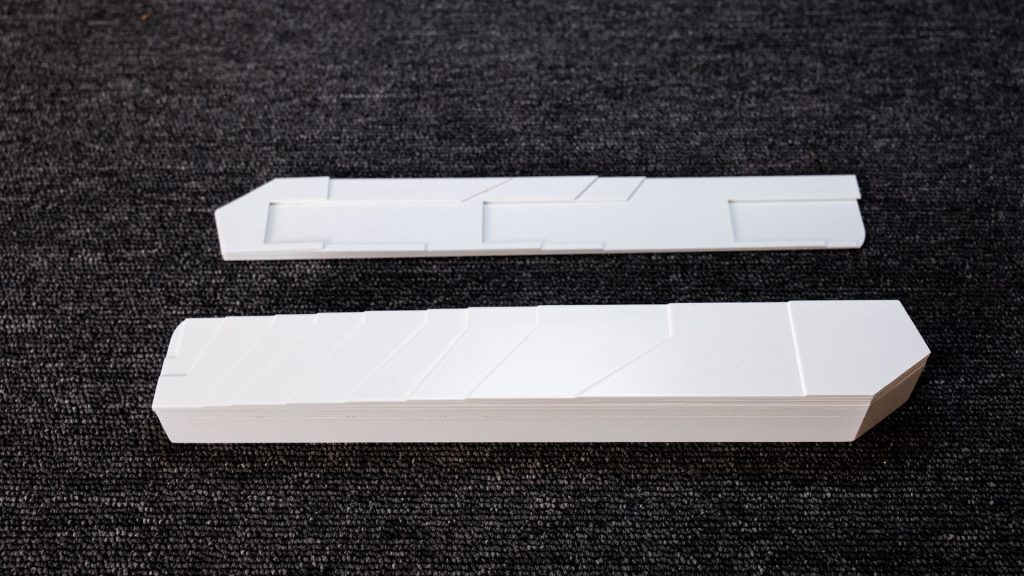
Assembling and finishing model parts
The parts are finished and integrated into the model: digital planning and craftsmanship combined in one result.
Case study
Studio Revoluzzer: from getting started with CNC to professional model production
Studio Revoluzzer stands for high-quality architectural model making in which digital planning and precise craftsmanship come together. For Thomas Nadler, getting started with CNC production began with a STEPCRAFT D-Series. With more demanding projects and higher requirements for size, precision and repeatability, his machine requirements grew too.
Today, Studio Revoluzzer uses the STEPCRAFT Q-Series to produce contour lines, engravings and individual model parts directly from digital data. Especially with recurring elements and topographic structures, results can be reproduced, changes implemented more flexibly, and production stays in the studio.
What I particularly value about the STEPCRAFT Q-Series is its high repeatability. It delivers the precision that is decisive for recurring parts in architectural model making.
Thomas Nadler, Studio Revoluzzer
Typical applications
Application examples in architectural model making
Many recurring, precision-critical or time-consuming work steps can be carried out efficiently with CNC: for clean contours, reproducible results and more control in the model-making process.
Contour lines and topographic models
- Representing terrain shapes and elevation profiles precisely
- For layer models, topographies and urban planning models
- Clean edges and reproducible results from digital data
Engravings and lines
- Engraving roads, paths and property boundaries directly into the material
- Representing labels, markings and contours permanently
- Producing fine details cleanly, accurately and repeatably
Building volumes and massing models
- Producing dimensionally accurate volumes and building masses precisely
- For variants, scale models and design studies
- Consistent appearance across several model parts
Base plates and site plans
- Milling exact outer contours, cut-outs and recesses
- Precise base for further model construction
- Incorporating site information, paths and structures directly
Facade elements and detail parts
- Preparing grids, openings and facade structures cleanly
- Producing delicate details for presentation models
- Repeatable quality for serial model parts
Recurring model parts
- Producing modules, plinths and series parts identically
- Fewer manual deviations in the model-making process
- Efficient for several identical or similar parts
Presentation and competition models
- High-quality model parts for pitches, competitions and presentations
- Fast implementation even with tight deadlines
- More time for assembly, finishing and final details
Related applications: Woodworking · Sign making
Solid wood
Building volumes from solid wood
Particularly high-quality architectural models thrive on their material. With the CNC router, you fit your models with building volumes made of real wood such as maple, lime, pear or oak. The volumes are milled from solid wood, with roof pitches, setbacks and engravings, and show the natural grain.
The router thus also complements the 3D printer that many firms already use: delicate details and hollow bodies come from the printer, terrain, base plates and solid wood building volumes from the router.
- Milling buildings and volumes from solid wood
- Fitting models with real wooden building volumes for a high-quality finish
- Reproducing identical building volumes as often as required
Machines
The right CNC machine for your architectural model making
All three series are suitable for architectural models. What matters is the size of your models and how many parts you want to mill at once.
D-Series
A compact start in model making
For competition models, terrain layers and engravings on a smaller area. Studio Revoluzzer started CNC production in 2015 with a D.840.
- Suitable forCompetition models, terrain layers, engravings
- Working areaup to 594 × 833 mm
from €1,399
M-Series
The versatile CNC router for workshop and production
Compact machine size, high rigidity and reliable precision for the regular production of engravings, contour lines and individual parts.
- Suitable forDemanding applications, limited workshop space, consistently reliable results
- Working areaup to 979 × 1444 mm
from €2,249
In use at Studio Revoluzzer
Q-Series
For larger and more demanding projects
When machining area, stability and productivity become more important: larger contour models, base plates and recurring components in your own workflow.
- Suitable forLarger formats, regular production, professional model-making processes
- Working area1302 × 2670 mm
from €20,199
Growing together
A CNC solution that grows with your requirements
Getting started with CNC production is often just the beginning. With increasing experience come new applications, larger projects and higher demands on working area, precision and efficiency.
That is why our support does not end with the choice of machine. We put together the CNC system, milling spindle, tools and accessories to suit your materials and applications, and support you with instructions and personal service when getting started and in day-to-day operation.
Induction and training
We support you in getting started so that you can quickly work safely with your machine.
Technical support
Our support team helps you with questions directly at the manufacturer.
Community
Exchange with other users and businesses.
More possibilities
Retrofit accessories such as tool changers, lasers or knives (D- and M-Series). Push long parts through the machine, which is open at the front and back (without tool changer). With Freestyle Milling™, remove the machine table and machine workpieces that do not fit on the table (M.500 to M.1000). And when the working area is no longer enough, we will advise you on the next larger series.
Materials
Materials for architectural models
Common model-making materials can be machined precisely with small cutters; solid wood and MDF also in three dimensions.
| Material | Note |
|---|---|
| Solid wood: maple, lime, pear, oak | Building volumes from solid wood; 3D machining with ball nose and end mills |
| MDF, plywood, model-making boards | Plinths, base plates, terrain layers |
| Rigid foam | Terrain layers and massing models; fine engravings with 0.5–1 mm cutters |
| Plastics, acrylic | Single-flute cutters for plastics, extraction against chips on the surface |
FAQ
Frequently asked questions
More answers in the machine comparison or by talking to us directly.
Can I mill building volumes from solid wood?
Yes. Buildings and volumes are produced three-dimensionally from a solid block of wood, with roof pitches, setbacks and engravings. The block height is limited by the Z stroke: 194 mm on the M-Series, 230 mm on the Q.408.
CNC router or 3D printer for architectural models?
The two complement each other. The 3D printer suits delicate details and hollow bodies, the CNC router solid wood, terrain, base plates, engravings and large formats. Real wood can only be milled.
Which cutters do I need for engraved lines?
For fine lines, cutters from 0.5 mm; for milled-through elevation layers, about 1 mm. Engraving bits are suitable for lines of a defined width.
How do I get my CAD data onto the machine?
For 2D contours, export DXF or SVG; for building volumes, a 3D model, for example as STEP or STL. A CAM program then generates the toolpaths.
Which machine suits my firm?
All three series are suitable; what matters is the model size and how many parts you mill at once. The D-Series suits competition models and terrain layers up to 594 × 833 mm. For engravings, contour lines and parts in regular use, the M-Series. For larger contour models, base plates and recurring components, the Q.408.
Let’s talk about your projects
Whether you want to automate your first work steps, bring production into your own studio or produce larger architectural models: show us what you have in mind. Together we will find the solution that suits your requirements.