

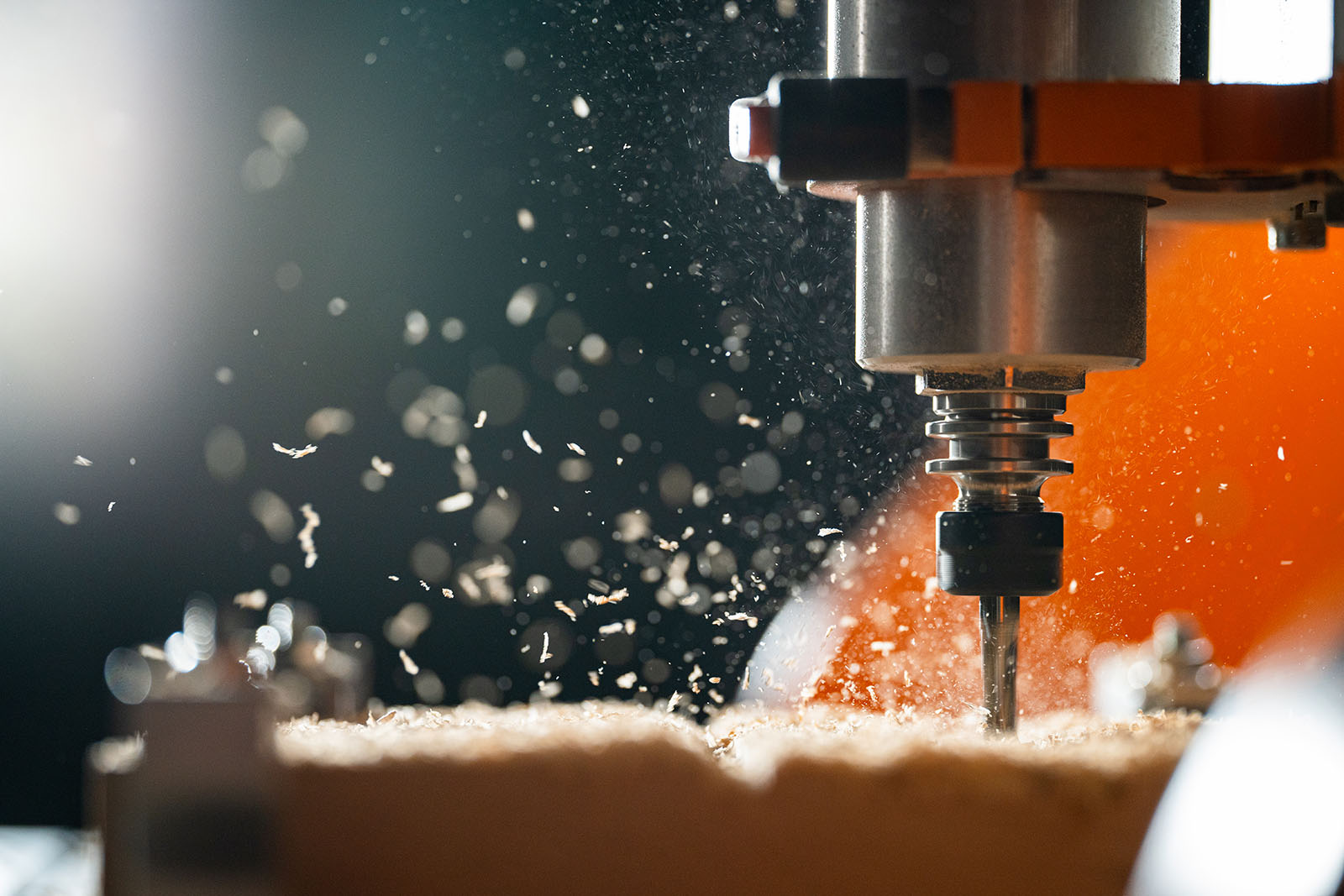
Woodworking
Precise woodworking with CNC gantry routers
Produce blanks, fronts, engravings, moulded parts, drilling patterns and recurring wooden components precisely, efficiently and directly in your own workshop. With STEPCRAFT CNC machines, joiners, cabinetmakers, furniture makers and wood processors add digital precision to their production, for one-off pieces, small series and custom work.
Why CNC
Why a CNC router in woodworking?
Woodworking requires experience, precision and clean results. At the same time, demands for speed, repeatability and custom production are rising. Customers expect tailor-made solutions, short response times and high-quality surfaces, from furniture and interior fit-out to decorative details.
With a STEPCRAFT CNC router, you turn digital designs directly into precise wooden components. Contours, cut-outs, engravings, holes and recurring components can be produced repeatably and integrated into existing workshop processes. CNC technology does not replace craftsmanship, it extends it.
Typical challenges in woodworking
Time pressure and efficiency
- Completing projects on time and economically
- Automating recurring work steps
- Reducing manual rework in a targeted way
Recurring components
- Consistent quality for series and small-series parts
- Reproducing components repeatably
- Fewer deviations in repeated work steps
Clean edges and precision
- Exact contours, cut-outs and drilling patterns
- Accurately fitting components for assembly and further processing
- Precise results even with more complex shapes
Wide range of materials
- Machining solid wood, plywood, MDF and sheet materials
- Flexible use of different material thicknesses
- Using the right tools for different applications
Case study
Craftsmanship meets CNC: experience from the workshop
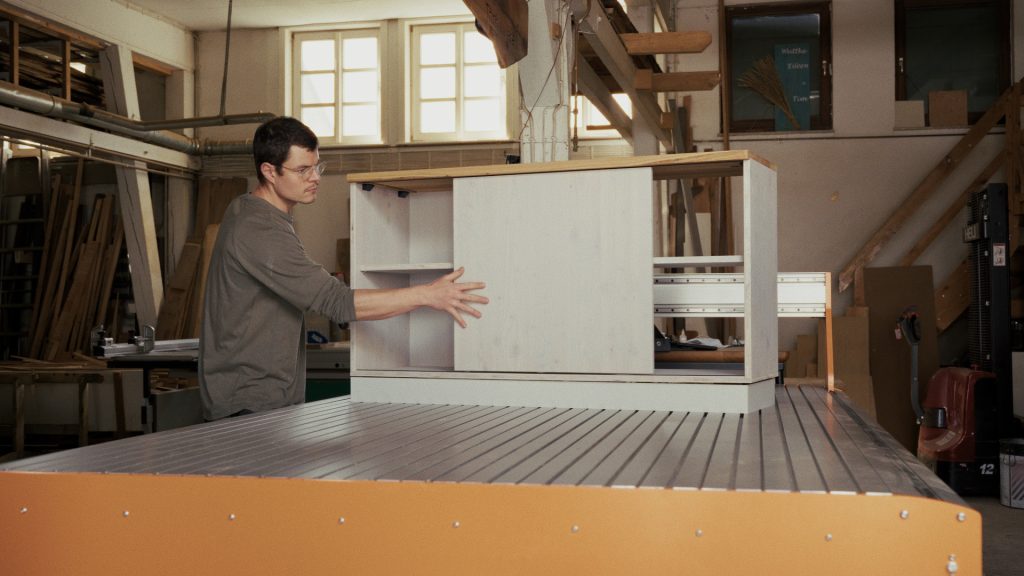
How does a CNC router fit into the everyday work of a joinery? In the video, Tim Wuttke gives an insight into his business and talks about his experience with STEPCRAFT: what place the machine has found in his workshop and why he relies on CNC.
He started with a STEPCRAFT M.1000, which is still in use today. He now also produces on a Q.408.
See how traditional woodcraft and digital production can be combined, and take away ideas for your own workshop.
While the CNC machine is milling, I can do other work – in some cases that doubles the workforce. Over many years I have put real mileage on the machine and earned a good amount of money with it. I can only recommend it to small and medium-sized joineries like mine.
Tim Wuttke, joiner
Workflow
From design to finished wooden component
With STEPCRAFT, you integrate CNC milling step by step into your existing woodworking workflow. An idea, drawing or CAD file becomes a precisely produced component that you process further, assemble or finish.

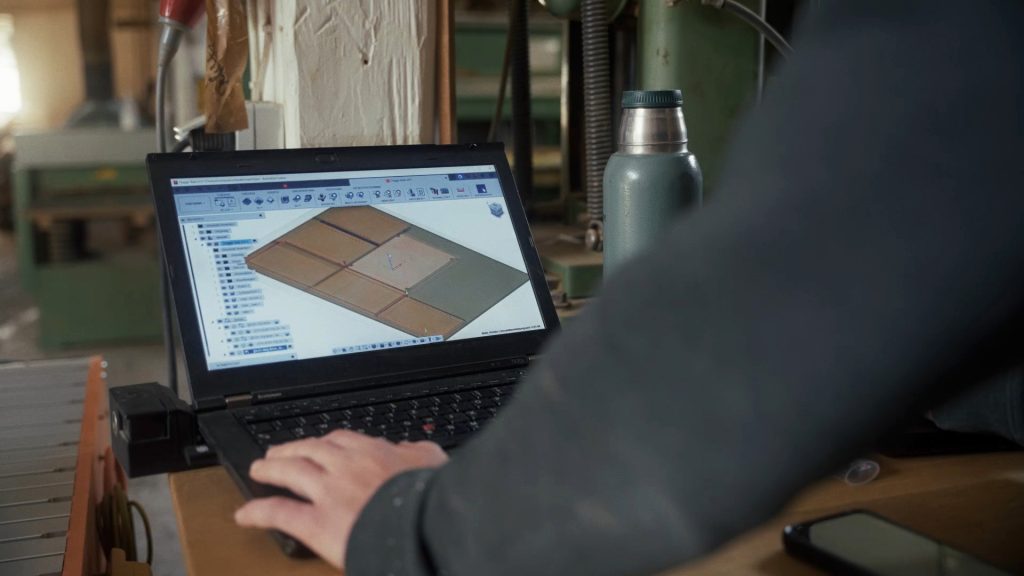
Planning and digital data
A piece of furniture, a front, a panel, a template or a special component: dimensions, material thicknesses, connection points, cut-outs and drilling patterns are prepared digitally.
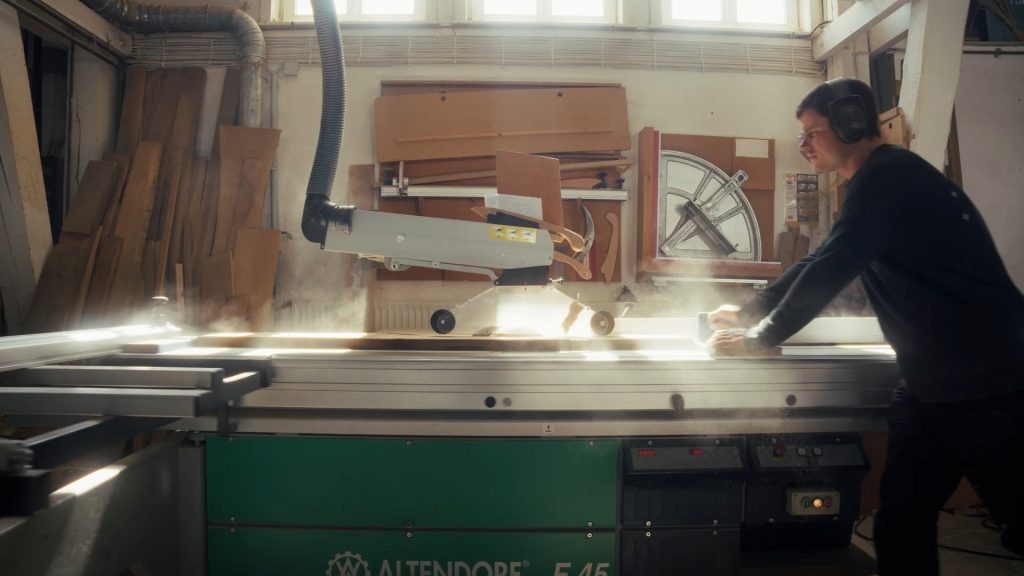
Preparing the material
Solid wood, MDF, multiplex, plywood or sheet material is aligned and securely clamped. With the gantry design, longer workpieces can be pushed through and machined step by step, depending on the application.
Defining the milling strategy
Tool, milling depth, feed rate and the order of work steps are matched to the material, surface and required fit.
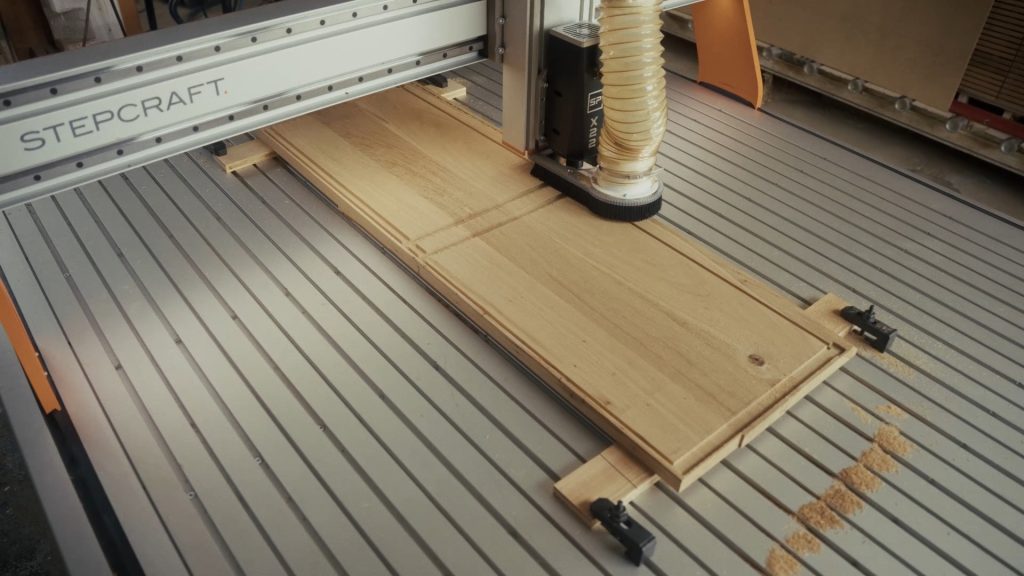
CNC milling
Cut-outs, contours, engravings, holes and recurring parts are produced repeatably, with consistent quality and fewer manual deviations.
Finishing, assembling, further processing
Sanding, oiling, painting, edge banding or assembling: the workpiece goes directly into furniture, interior fit-out, shop fitting or customer projects.
Typical applications
Application examples in woodworking
STEPCRAFT CNC machines support wood processors in many typical tasks in the workshop, furniture making and interior fit-out, from one-off pieces to recurring components.
Blanks and moulded parts
- Milling individual contours and shapes precisely
- Preparing components for furniture, built-ins and special solutions
- Producing efficiently from sheet material
Furniture and carcass construction
- Preparing side panels, shelves, back panels and connecting elements
- Producing drilling patterns, cut-outs and grooves repeatably
- Producing accurately fitting components for assembly
Fronts, engravings and details
- Designing furniture fronts with engravings or patterns
- Adding logos, lettering, ornaments and lines
- Producing decorative details cleanly and repeatably
Templates and series components
- Reproducing recurring components identically
- Making assembly templates and routing jigs
- Producing small series more economically and predictably
Interior fit-out and panel processing
- Preparing wall cladding, panels and acoustic elements
- Milling cut-outs for technical equipment, lights or installations
- Machining large-format panels in a structured way
Prototypes and one-off pieces
- Taking ideas quickly from design to component
- Testing new shapes, constructions and variants
- Implementing individual customer requests flexibly
3D milling and surface textures
- Producing reliefs, organic shapes and textured surfaces
- Creating design elements for furniture and interiors
- High-quality accents for individual projects
Related applications: Architectural model making · Prototyping
Machines
The right CNC solution for your woodworking shop
Not every workshop has the same requirements. Some businesses want to carry out their first CNC projects, others need more space for larger components and series.
In use at Tim Wuttke
M-Series
The versatile CNC router for your woodworking shop
Compact machine size, high rigidity and reliable precision for templates, fronts, engravings and accurately fitting wooden components. Working area up to 979 × 1444 mm, linear guides and two table levels; you push longer parts through step by step.
- Suitable forSmaller wooden components, limited workshop space, regular use in the trade
- Working areaup to 979 × 1444 mm
from €2,249
In use at Tim Wuttke
Q-Series
More working space for furniture making and interior fit-out
Large machining area and stable construction for furniture elements, panel cutting and recurring components, from custom work to small series.
- Suitable forLarger formats, recurring orders, professional woodworking
- Working area1302 × 2670 mm
from €20,199
Growing together
More possibilities for your woodworking shop
A template, a custom furniture front or the first small series: CNC production often starts with a specific task. Everyday workshop practice then shows which other jobs become easier and which new customer requests you can fulfil.
We match machine, milling spindle, tools and accessories to your woodworking: to your typical materials and component sizes, the space available and your processes.
Induction and training
We support you in getting started so that you can quickly work safely with your machine.
Technical support
Our support team helps you with questions directly at the manufacturer.
Community
Exchange with other users and businesses.
More possibilities
Retrofit accessories such as tool changers, lasers or knives (D- and M-Series). Push long parts through the machine, which is open at the front and back (without tool changer). With Freestyle Milling™, remove the machine table and machine workpieces that do not fit on the table (M.500 to M.1000). And when the working area is no longer enough, we will advise you on the next larger series.
Materials
Wood and wood-based materials
All STEPCRAFT series mill wood. The cutter, speed and clamping of the workpiece are decisive for the result.
| Material | Note |
|---|---|
| Solid wood (softwood and hardwood) | Spiral cutter, right- or left-hand spiral, depending on whether you want the clean edge at the top or bottom |
| MDF, HDF | Good milling properties, also for 3D contours and engravings; extraction required |
| Multiplex, plywood, glued laminated panels | Compression cutter for clean edges on both sides |
| Chipboard, laminated | Compression cutter against tear-out in the laminate |
| Veneer and thin panels | Vacuum table or spoilboard for clamping over the full surface |
FAQ
Frequently asked questions
More answers in the machine comparison or by talking to us directly.
Which CNC router is suitable for a joinery?
For templates, fronts, engravings and parts up to 979 × 1444 mm, the M-Series. If you regularly machine full sheets up to 1250 × 2500 mm, choose the Q.408.
Can I machine full sheets?
Yes, on the Q.408 with a working area of 1302 × 2670 mm. On the M-Series, you machine cut-to-size panels or push longer parts through step by step.
Which milling spindle do I need for wood?
All M-Series spindles are suitable for wood; for larger cutters and high feed rates, the AMB 1400 FME-P DI and MM-1650 DI offer more power. The Q.408 works with the Spinogy X22 with 2.2 kW.
Is CNC worthwhile for small businesses?
That depends on your orders. Time savings are typical for recurring parts, templates and engravings. We are happy to work out the figures with you based on specific components.
Is there induction and support?
Yes. We support you in getting started, and if you have questions, you can reach our support directly at the manufacturer. Books and training material are available in the shop.
Let’s talk about your workshop
Which jobs take up a particularly large amount of your time? Which components would you like to produce yourself in future? Tell us about your plans. Together we will find the solution that suits your business, your materials and your next orders.