
Application · Prototypes & small series
CNC router for prototyping and small series
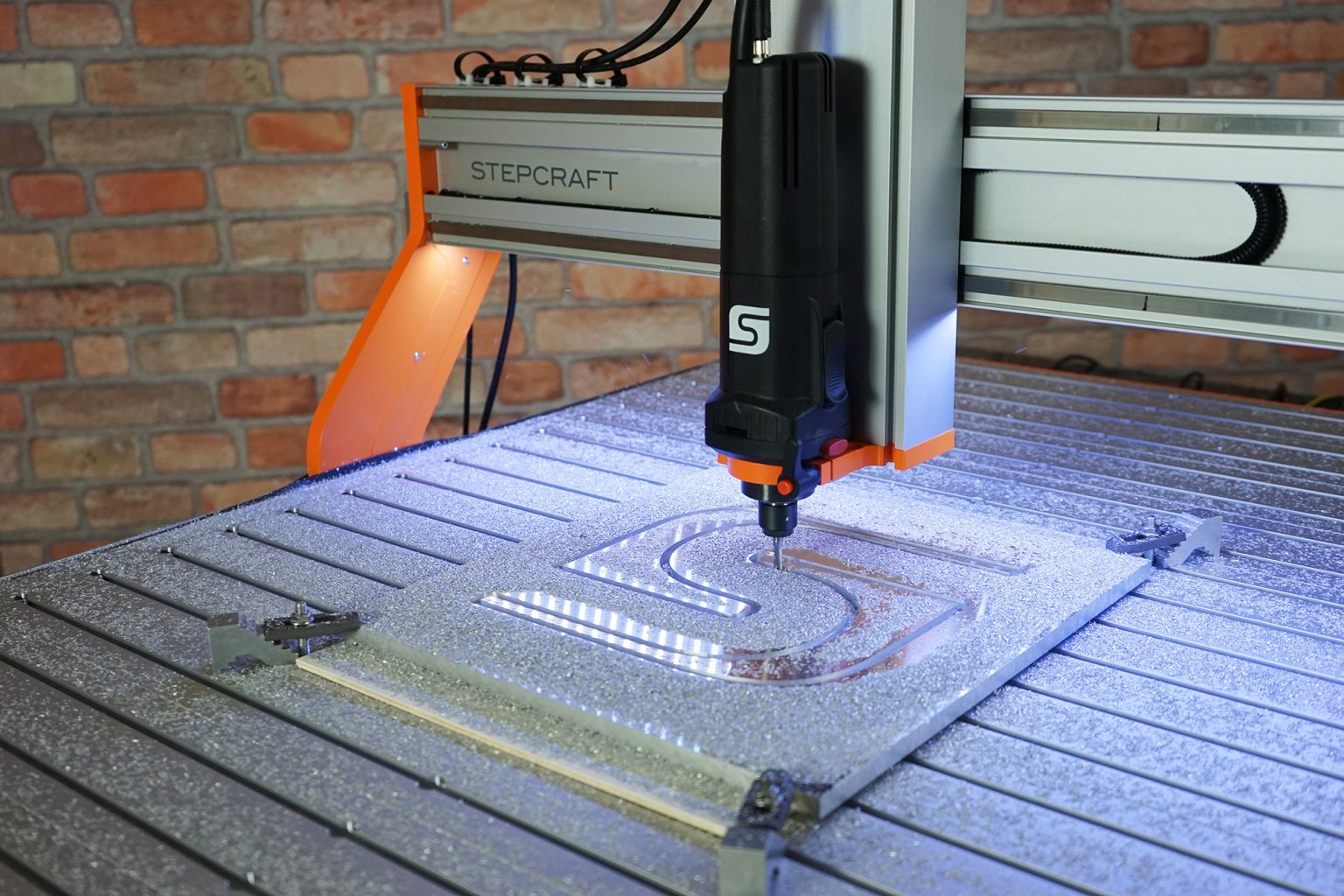
Produce housings, holders, fixtures, mockups and functional parts from plastic, wood, aluminium and brass in-house. You mill changes to the CAD model yourself right away instead of waiting for suppliers, and confidential designs stay in-house.
Applications
What development and production teams make with CNC
Every iteration you do not outsource saves waiting time. For small series, repeatability ensures identical parts.
Mockups and fit-check models
Static prototypes for checking CAD designs, produced as often as needed until everything fits.
Housings and front panels
Cut-outs, holes and engravings in aluminium and plastic.
Fixtures and gauges
Holders, drilling and assembly fixtures for your own production.
Functional parts
Holders, adapters and connecting elements from POM, polyamide or aluminium.
Small series
Recurring parts with the same zero point, on the M- and Q-Series with tool changer.
Samples and trade fair models
Display models from wood, Ureol or plastic without external production.
Related applications: Woodworking · Sign making · Universities and training
Case study
Dornier Seawings: mockups for the Seastar
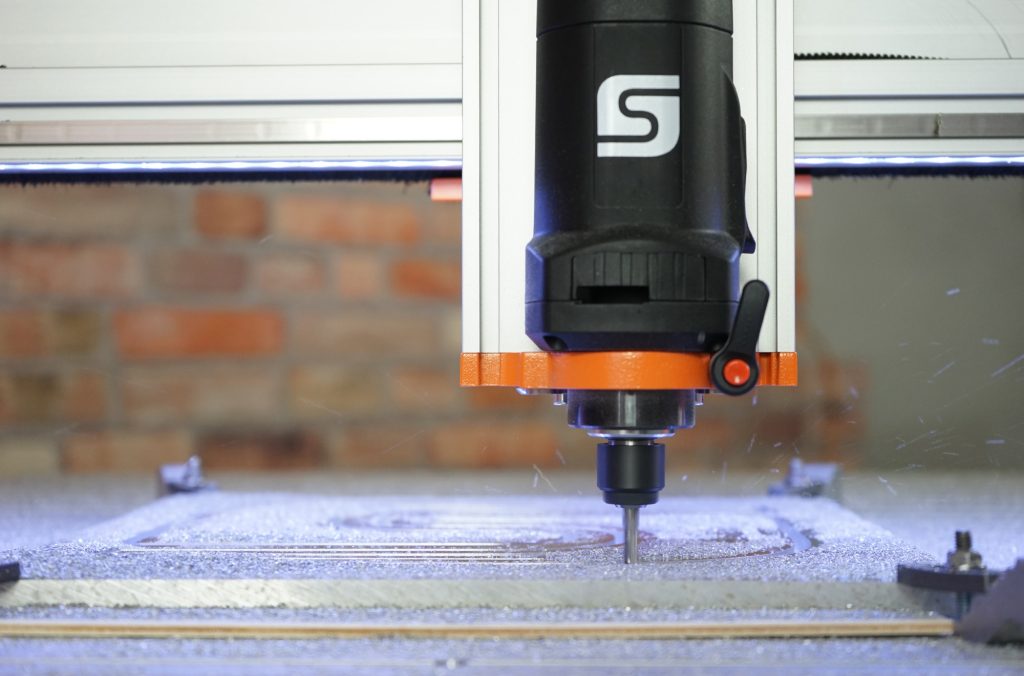
For the pre-series construction of the Seastar amphibious aircraft, the Dornier Seawings team in Oberpfaffenhofen produced engineering mockups on a STEPCRAFT D.840: fit-check models for batteries, valves, instrument panels and connecting elements, used to check CAD designs before production in the target material.
It often took five to seven iterations until a part fitted. Instead of waiting a week for an external mockup, the team had the part in hand after around eight hours, made from Ureol, wood, aluminium, carbon or glass fibre.
Of course I can outsource the mockups, but then I wait a week. This way I put it on the router and have it in eight hours.
Markus Lehmann, Production Manager, Dornier Seawings


Workflow
From STEP model to component
This is how an iteration works in-house.
- Import the modelThe part comes from the design department as a STEP or STL file.
- Calculate toolpathsDefine tools, depths of cut and setups in the CAM program, for example Fusion or DeskProto.
- Clamp and millClamp the blank on a vacuum table, with clamps or in a vice, and mill it.
- Check and adjustFit or measure the part, change the CAD model and mill the next version.
Machines
The right machines for prototypes and small series
Three series are suitable, depending on part size, material and quantity.
D-Series
Compact for mockups
Parts up to 594 × 833 mm from wood, plastic and Ureol. Dornier Seawings used it to produce fit-check models for the Seastar.
- Suitable forMockups, fit-check models, holders
- Working areaup to 594 × 833 mm
from €1,399
Workshop machine
M-Series
For functional parts and fixtures
Linear guides, optional HIWIN® ball screws and tool changer. For parts made of aluminium and brass.
- Suitable forHousings, fixtures, functional parts
- Working areaup to 979 × 1444 mm
from €2,249
Q-Series
For series
Closed-loop drive, 10-position tool changer and pop-up pins for repeatable series.
- Suitable forSmall series, sheet parts
- Working area1302 × 2670 mm
from €20,199
Materials
Materials for prototypes
Prototypes are often made from substitute materials; functional parts and small series from the target material.
| Material | Note |
|---|---|
| Ureol, model-making boards | Easy to machine for mockups and design models |
| Engineering plastics: POM, PA, PE, ABS | Functional parts and housings |
| Aluminium, brass, copper | Front panels, holders, adapters; observe the guide values per series |
| Wood, plywood, MDF | Fit-check models and fixtures |
| CFRP, GRP | Diamond-cut cutters and extraction required |
FAQ
Frequently asked questions
More answers in the machine comparison or by talking to us directly.
What accuracy can I achieve?
According to the manufacturer, based on the spindle specification: D-Series ±0.04 to ±0.05 mm, M-Series ±0.025 mm or ±0.015 mm with HIWIN® ball screws, Q.408 ±0.012 mm.
Can I use STEP files?
Yes. CAM programs such as Fusion or DeskProto read STEP and generate the toolpaths for the control from it.
Which machine for aluminium prototypes?
For regular aluminium parts, the M-Series with HIWIN® ball screws or the Q.408. You will find guide values for cutters, feed and plunge depth in the milling parameters.
Is your own machine worthwhile compared to external production?
Especially if you iterate often, need short turnaround or want designs to remain confidential. We are happy to review typical parts with you.
Can I produce several identical parts?
Yes. With a fixed zero point, stops or vacuum clamping, identical parts are produced in succession; on the Q.408, pop-up pins and tool changer shorten set-up.
Can I mill 3D contours too?
Yes. All series mill 3D surfaces from above, for example housing shells or moulds. For undercuts, you turn the part over and mill from the second side.
Produce prototypes yourself in future?
Send us a typical part or a STEP file. We will recommend machine, spindle and clamping equipment.